
Quebec City KOA, our next destination, was 240 km give or take from our campground. I remember thinking there was far more traffic than I would have expected between the two. While there is a major road that we took, the A20, it was never light traffic. I had no issues, but unfortunately John and Sherry, from Tuscon (and friends from my Alaska trip) had a trailer wheel bearing go bad; they pulled over when they noticed some smoke! Harry and Linda, our tailgunners, stopped and helped John fix it enough he could get to the campground. Many of us had stopped some 40 miles ahead of them at a rest area; Jerry was preparing to drop his trailer and go back when we heard they were finally able to get moving again. But it reinforces to me why I go with groups of people. Someone is always around ready to help. Jerry has torqued all my lugnuts and my hitch bolts at least once already.
The KOA in Quebec City was much more to my liking; I could park my truck in front of the fifth wheel without too much maneuvering around. It was also near a large IGA store which I ran to the day we pulled in. It was a bit weird not knowing the brands they carry and not recognizing foods since all the descriptions were in French, but I did ok.
The next morning was our first of two full day bus tours. This time the bus left at 8 sharp and our guide was a lovely gentleman who introduced himself as “Roger the great”. He clearly has a great love for his city and was full of knowledge about what we were seeing. The only sour note is that the weather was not so cooperative; it was raining and that would be the theme for both days. Wind, wind, wind, rain, rain, rain. We just brought our rain coats and powered on.
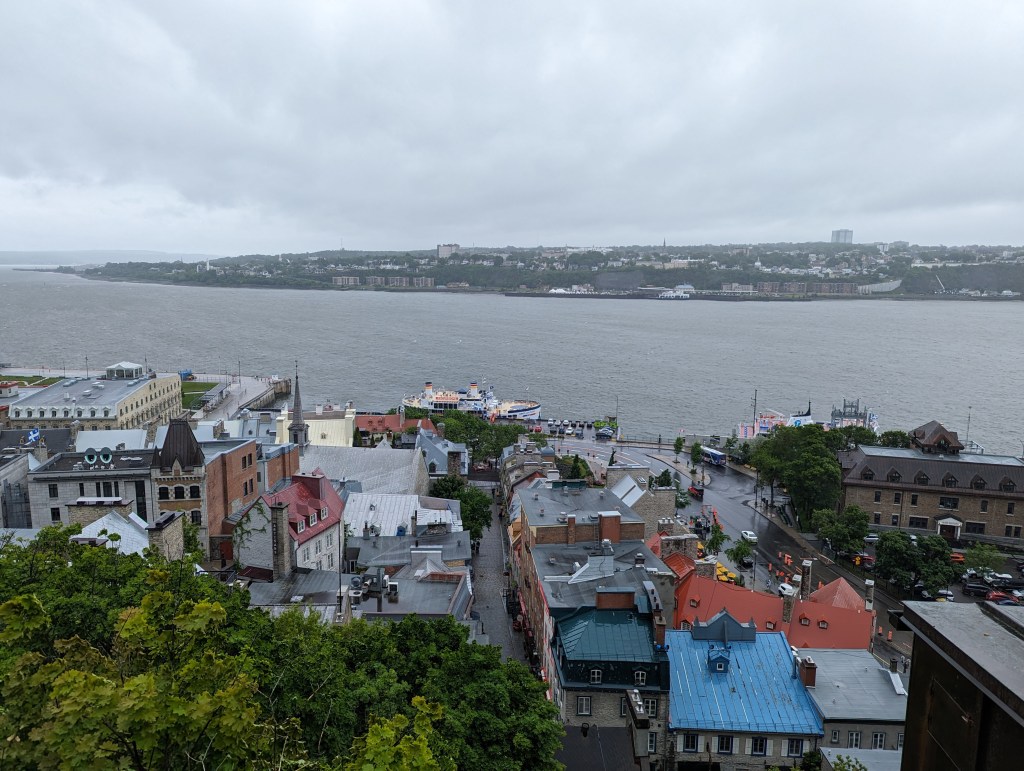
Quebec City (hard K sound for the Qu, not cwa-bec) is on the north side of the St. Lawrence river, while our campground is on the southside in a place called St. Nicolas, very near Lévis. Quebec City was founded in 1608 by Samuel Champlain. He took the Algonquin word for the area, Kébec, which means “narrows” because the St. Lawrence River narrows down to just 3/4 mile wide here. Quebec City is also where the river becomes tidal. The St. Lawrence is the main discharge river for the Great Lakes; it is all freshwater until around Quebec City where the water starts to increasingly become “brackish” or salty, and there start to be noticeable tides.
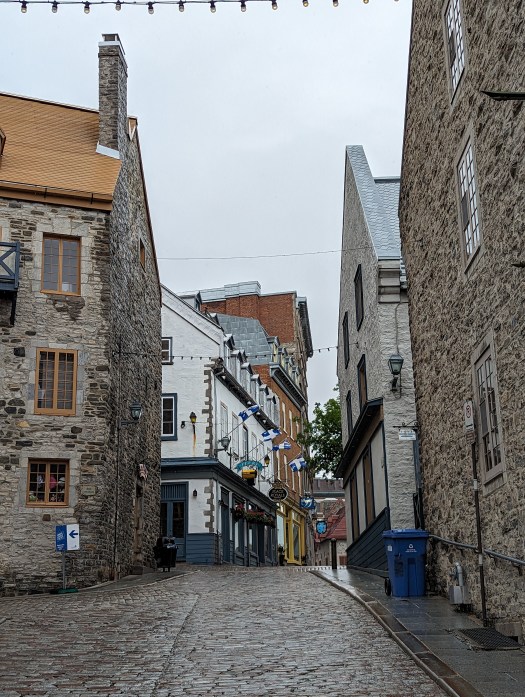
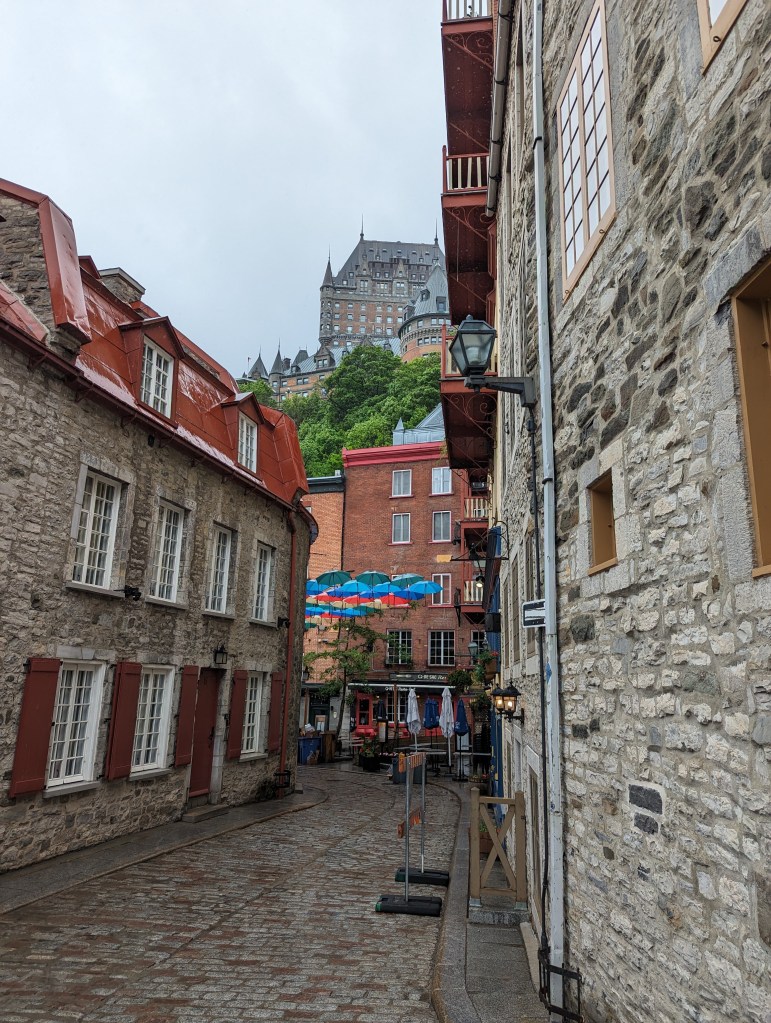
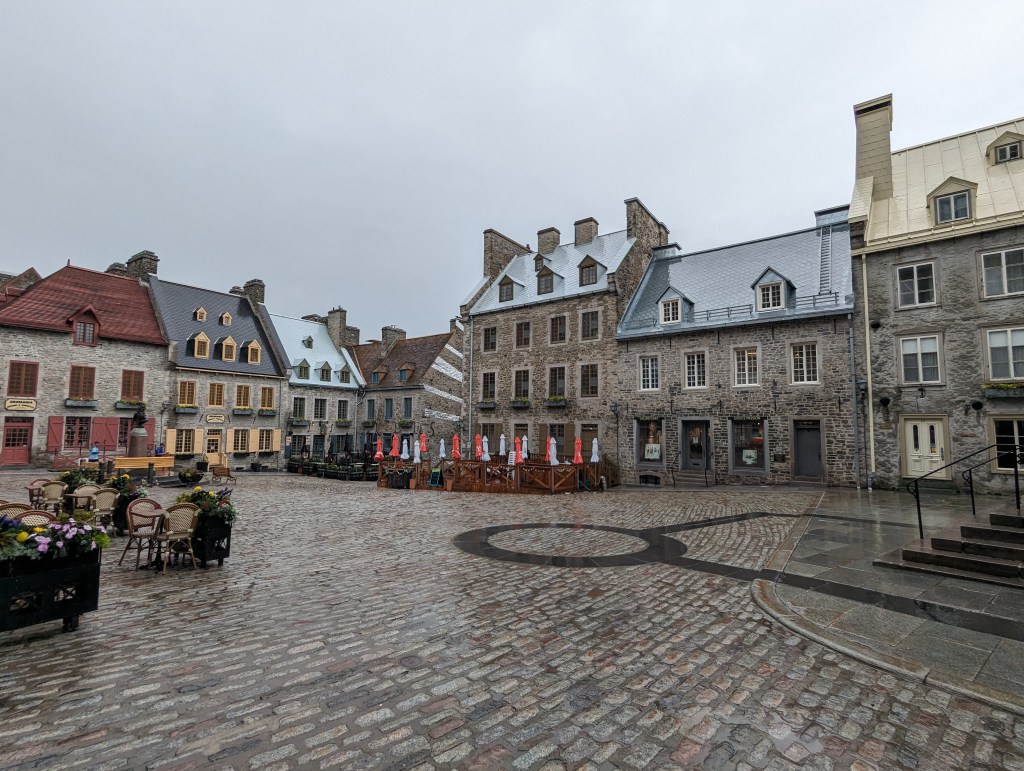
After we crossed the bridge and drove along a lovely riverside road for some time we came to Lower Town. Picture a city built on a cliff. There is an Upper Town and a Lower Town. Imagine you are a settler trying to survive this harsh land; they build walls to surround it. Quebec City is the only fortified city with its walls and gates still remaining north of Mexico. It was designated a UNESCO World Heritage site in 1985.
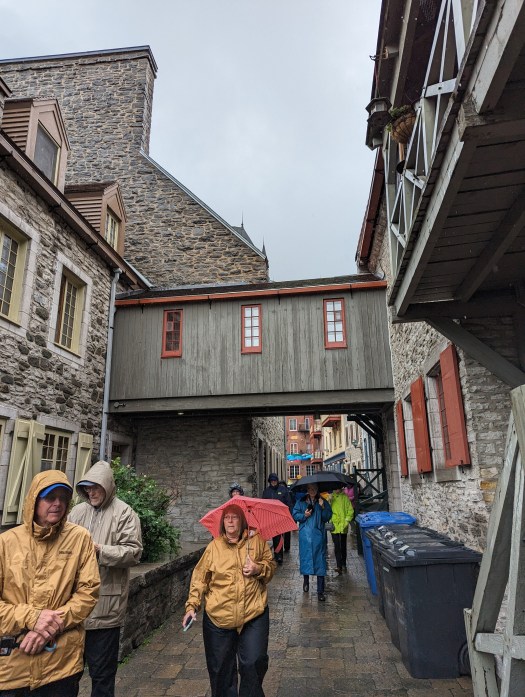
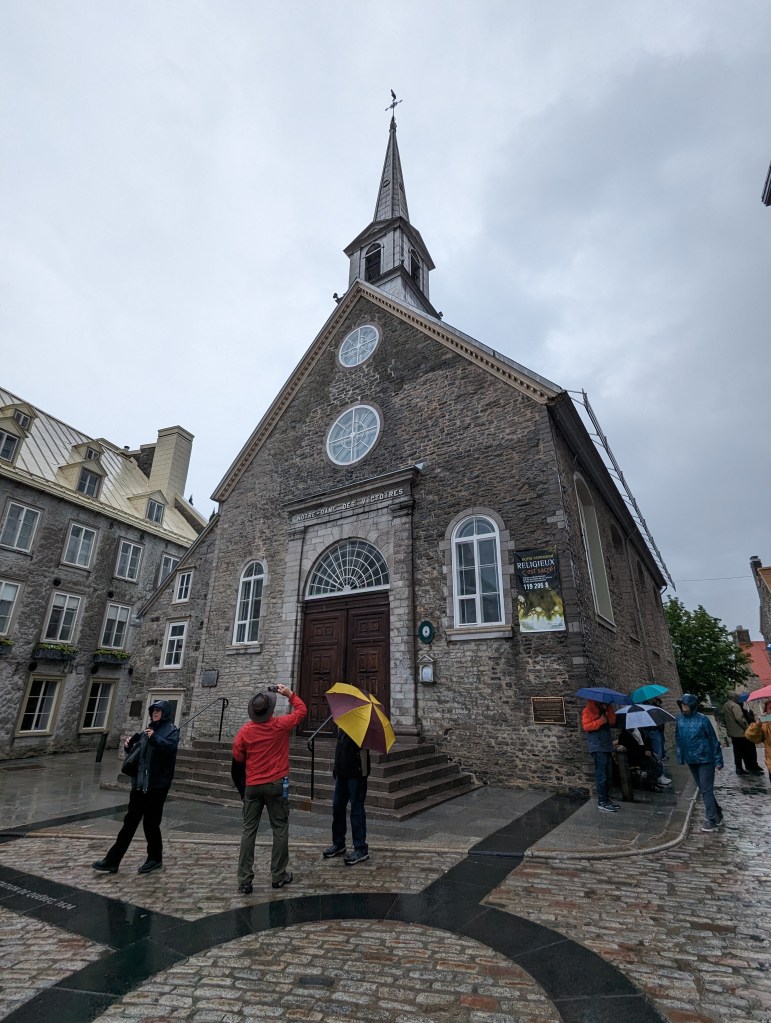
We set out with Richard to walk the cobblestone streets in the rain. As it happened, there was some sort of marathon/running race happening at the same time, so we cheered on the runners as we kept encountering them on our explorations.


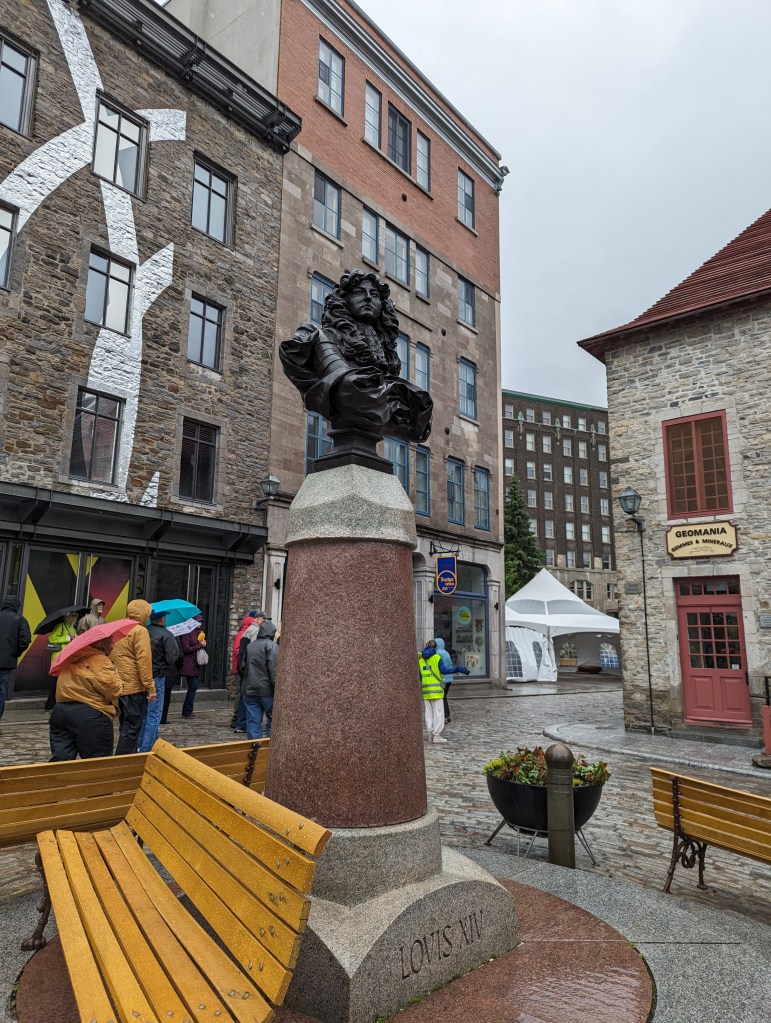
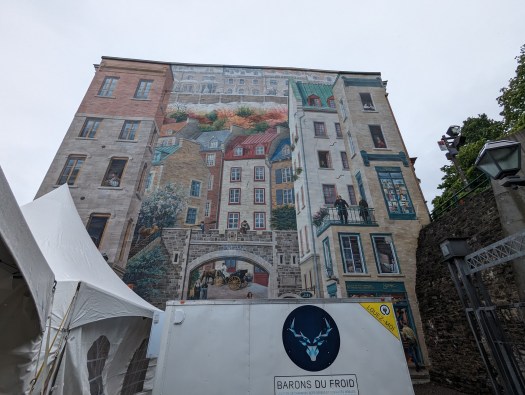
Roger asked us who the biggest enemy of the people of Quebec City was. I thought maybe Montreal, if there was some sort of rivalry between the cities, or perhaps it might be the English speaking parts of Canada as Quebec is very aggressive about preserving the French language and culture (as no English on the signs….). But the real answer: winter. It’s very cold, very snowy. And the houses have to be built to withstand the cold and hold up under the snow. North facing walls won’t have windows, for example. So they paint murals on them. Here’s a great example:
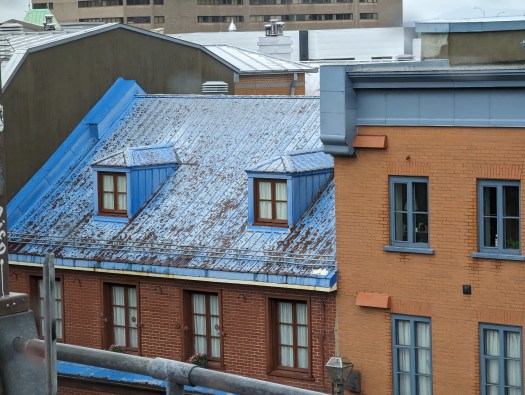
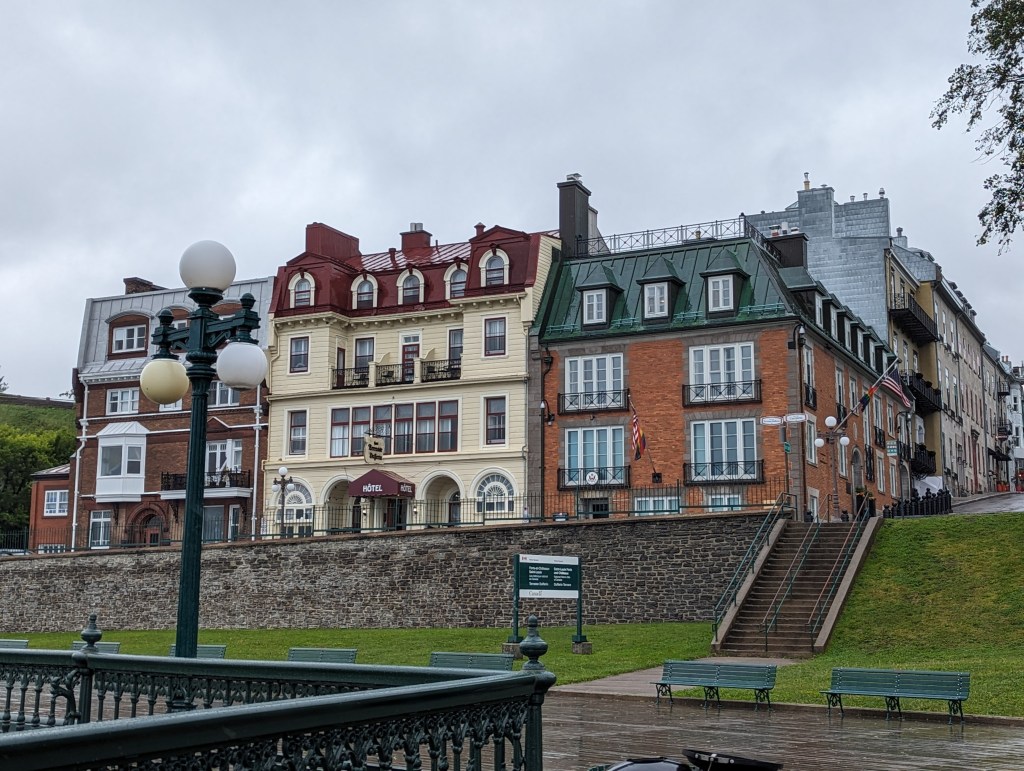
We wandered a few blocks through Lower Town then reloaded on the bus. Our driver, Yves, took us to Upper Town, though it was challenging with road closures due to the race. One thing Roger pointed out was the roofs of buildings. Remember, winter is their greatest enemy. Shingled roofs don’t last very long. So, many will have tin roofs that they have to paint to keep from rusting. However, Quebec is one of the largest producers of copper in the world. So a great solution to the roof issue is to use copper. There were tons of buildings with the green patina roofs that marked a copper roof that’s been in place for years. And some with the brown copper of a relatively new roof. I liked the tin ones too as they were often quite colorful.
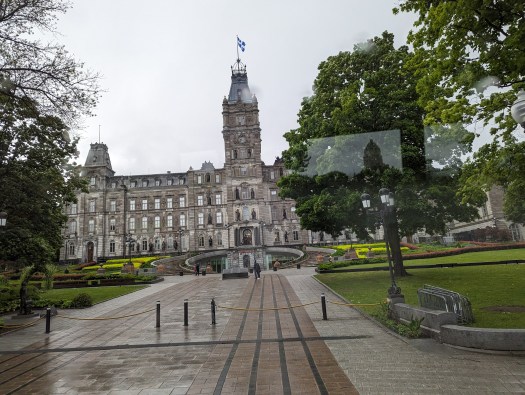
We also drove around the Plains of Abraham, which is part of the Battlefields Parks in QC. It’s named after the man who owned the land originally. During the French and Indian War, the French of course were in control of Quebec City. On the night of September 13, 1759, 4,400 British troops under the command of General James Wolfe climbed the cliffs during the night, undetected, and surprised the French army, who thought the cliffs were impassable. It was over in 15 minutes, though Wolfe was killed (as well as the French commander, the Marquis de Montcalm). Today the Plains are a city park with historical markers and wide open green spaces. We did not get off the bus save for one site, a statue dedicated to Joan of Arc.


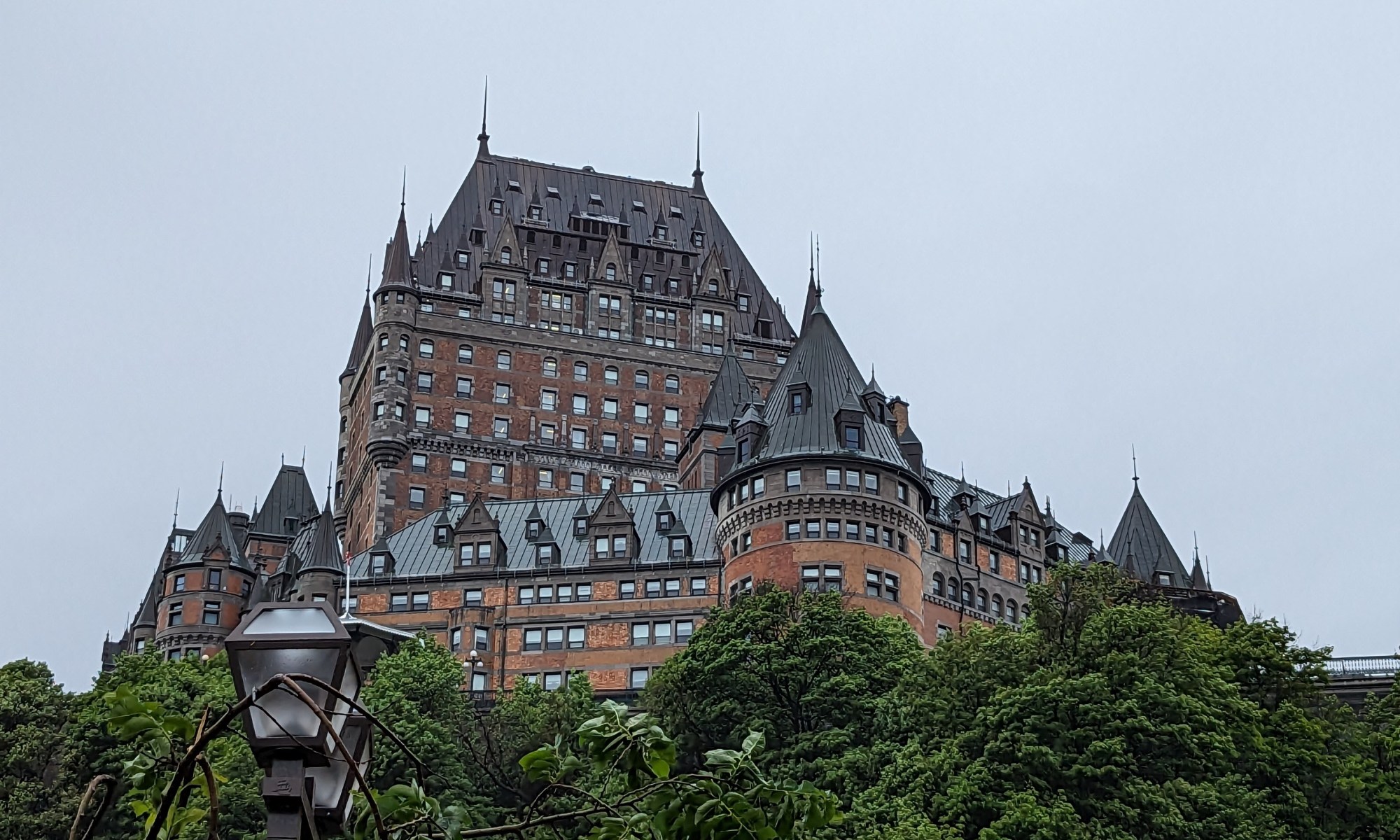
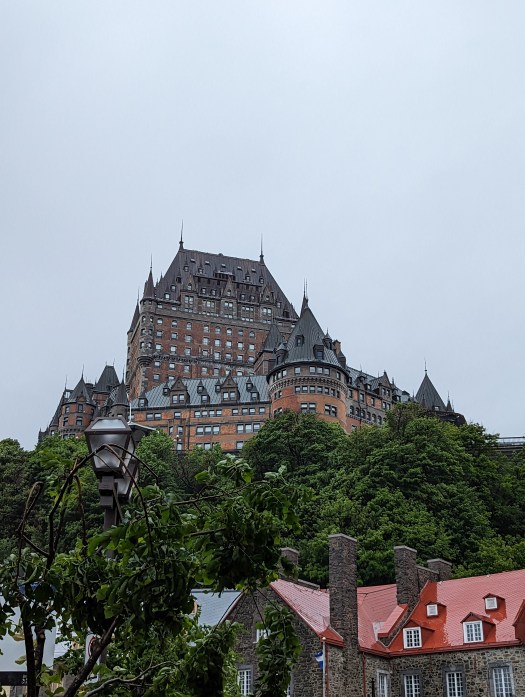
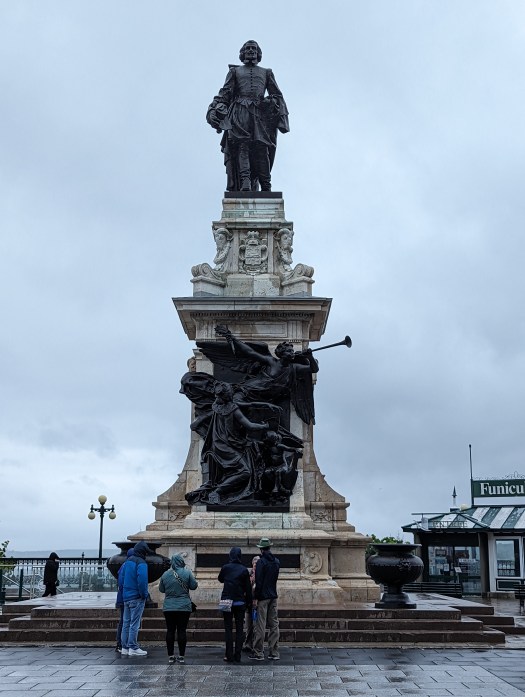
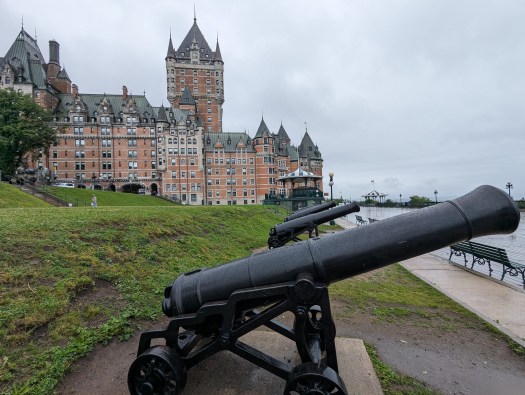
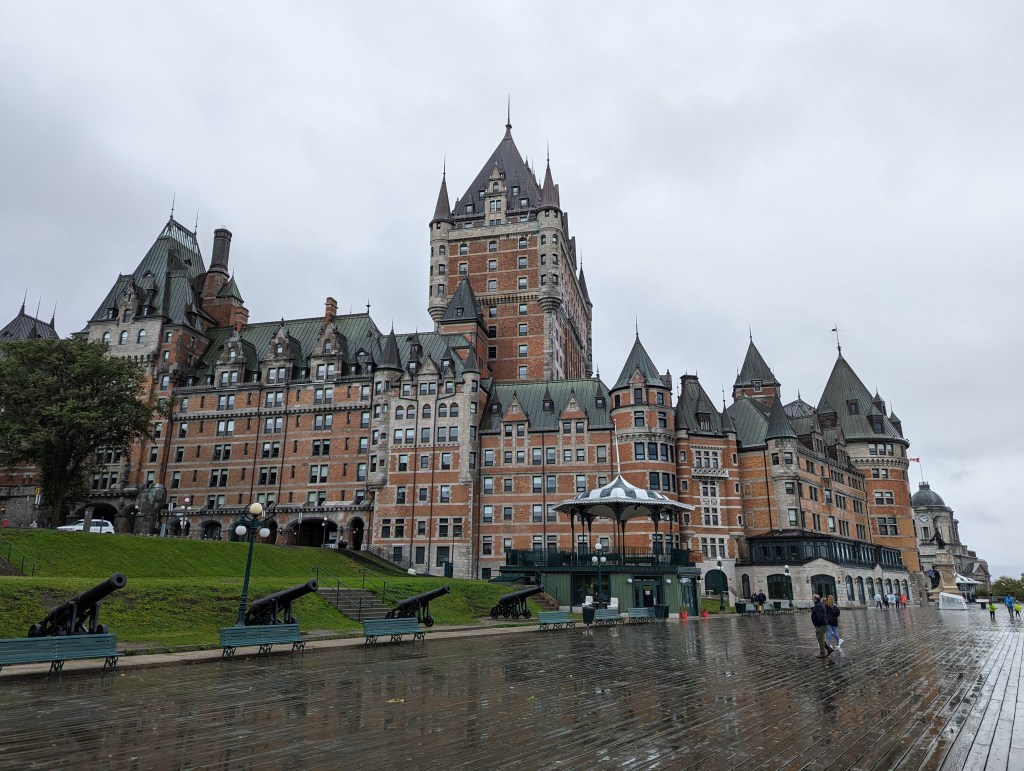
At lunchtime, we were driven up the Chateau Frontenac. This is a hotel, one of the grand hotels built by the Canadian Pacific Railway to encourage tourism (and use of the railways) in 1892. During World War II, this is where allies such as Churchill, Roosevelt, and Mackenzie King (Canadian PM) met to discuss strategies during the first and second Quebec conferences. Our lunch there was delicious and we had a great view of the rain over the St. Lawrence. Afterwards I wandered outside though the winds were gusting into the 30 mph range. It was challenging just to hold my camera still.



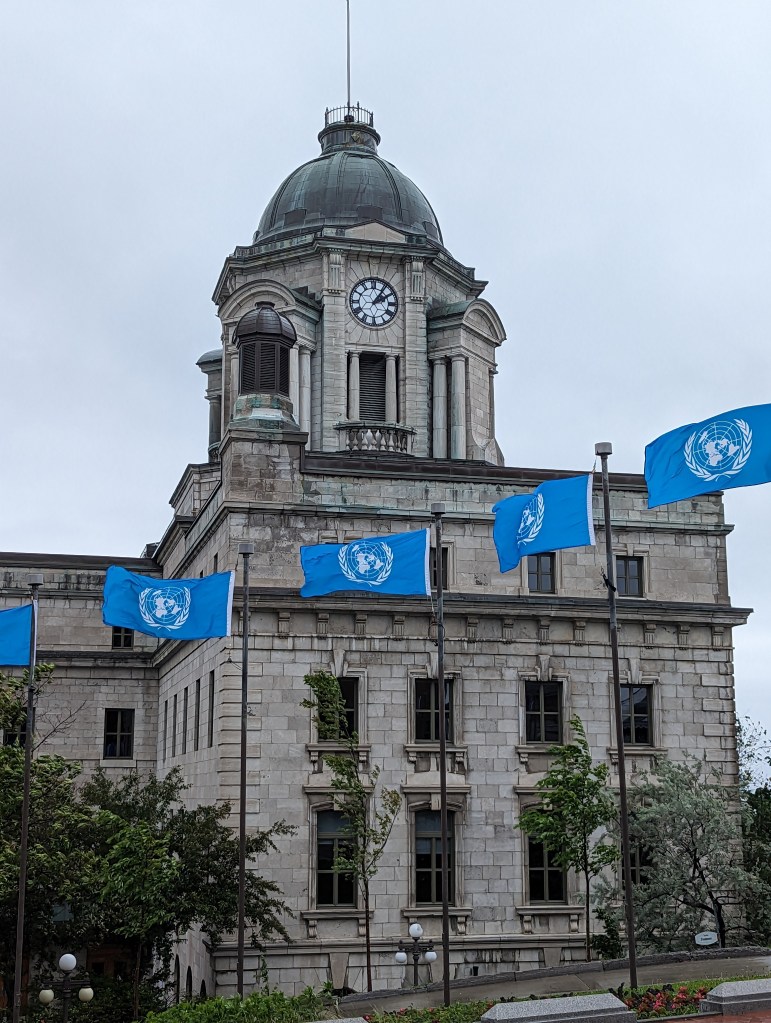
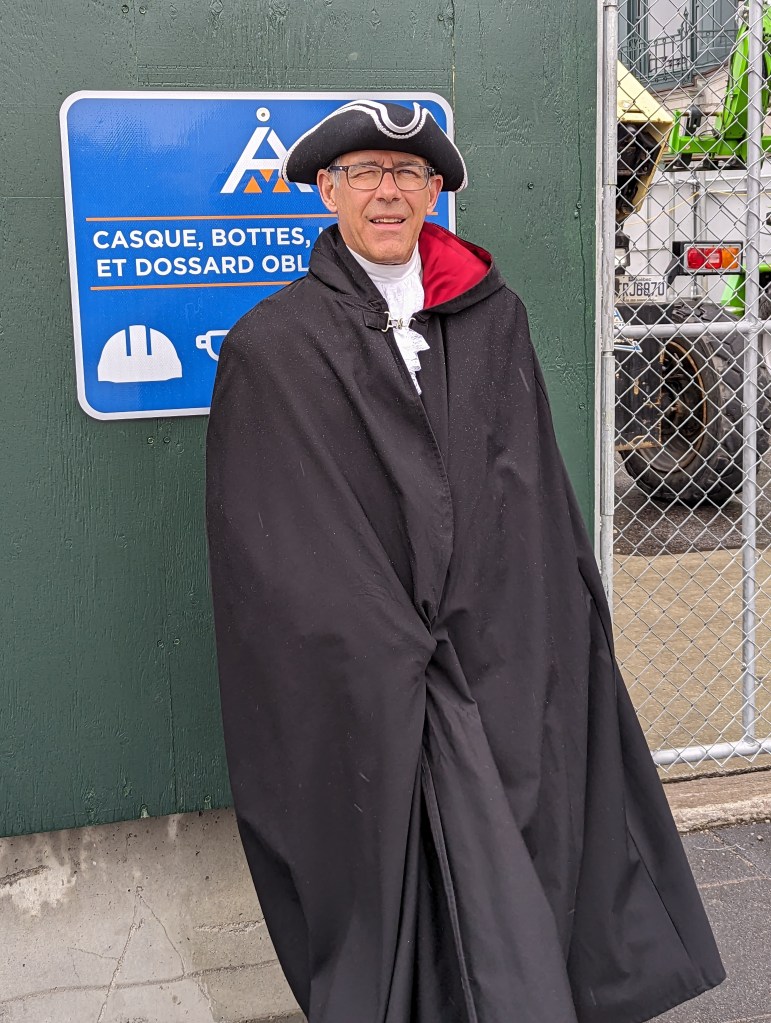

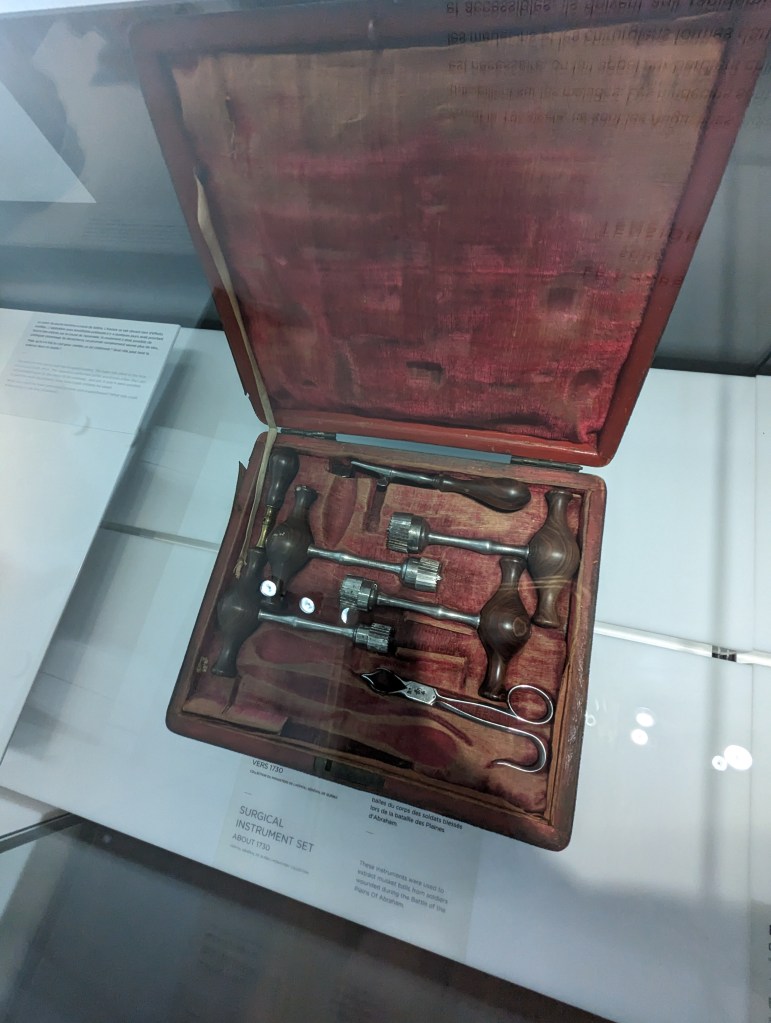
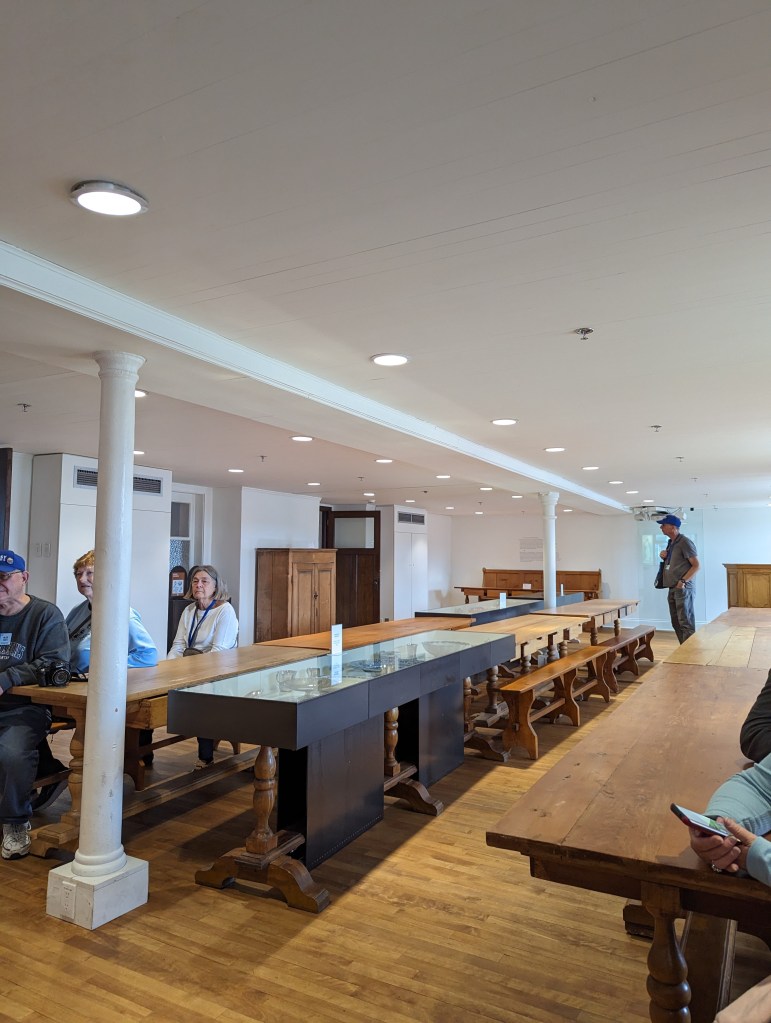
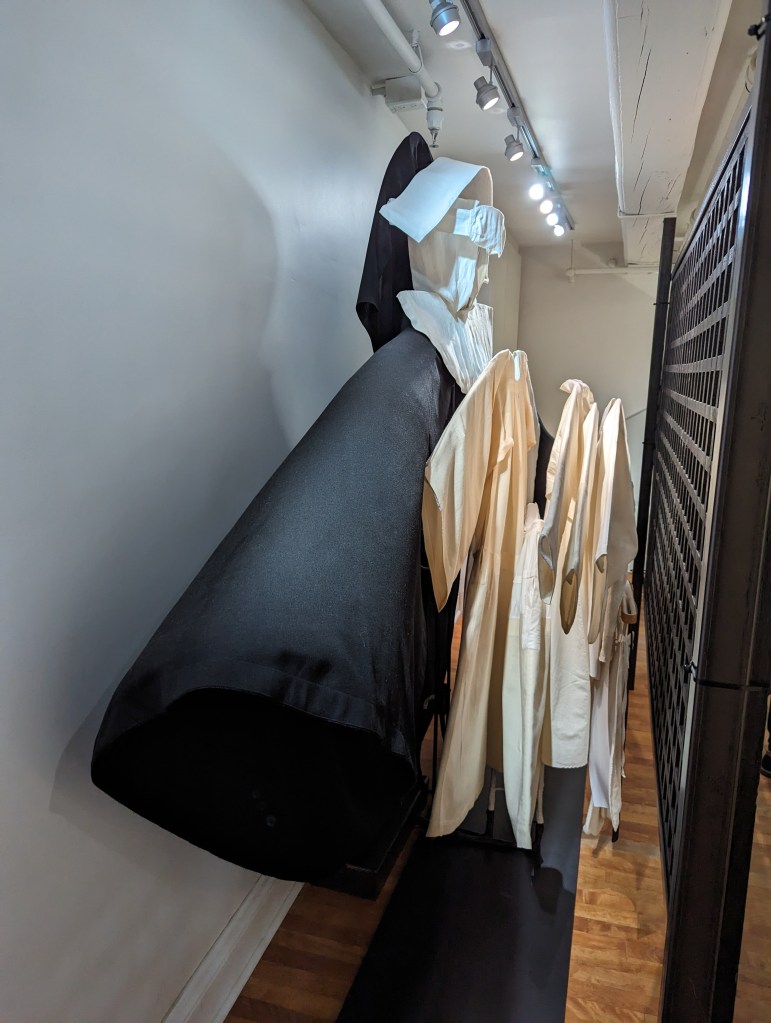
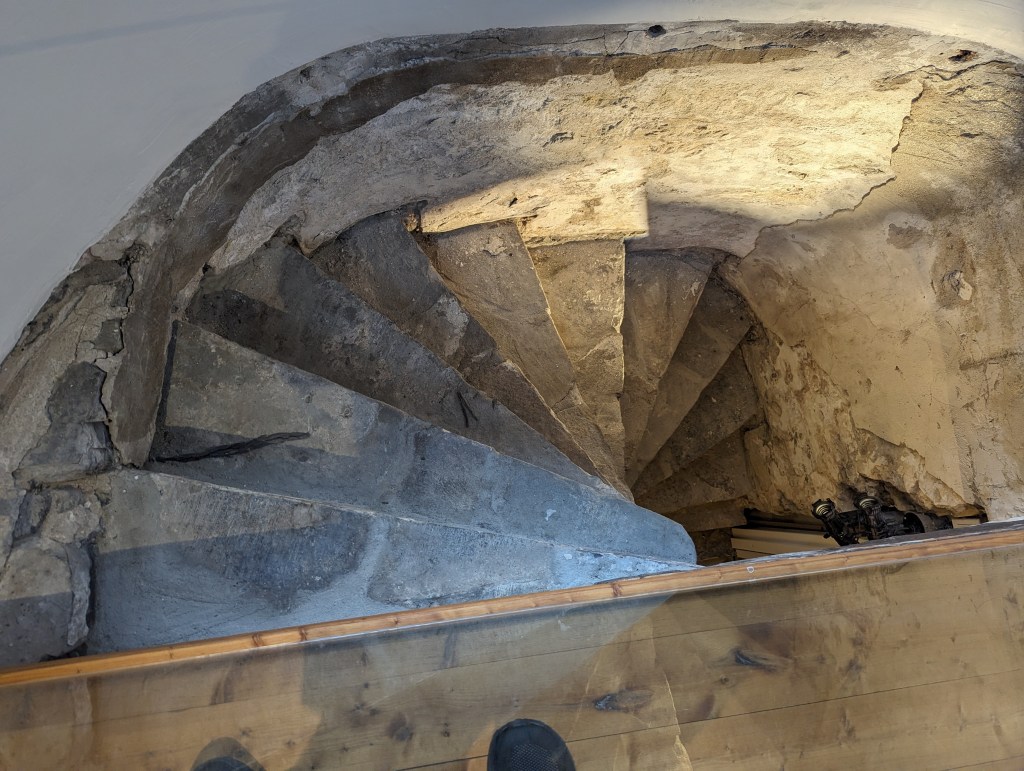
After lunch, we were taken to the first hospital established north of Mexico in North America, the Hotel-Dieu de Québec. It was built and run by Augustinian nuns in 1644. The original building is now a museum, which we walked through, but it is next door to the modern teaching hospital, associated with Laval University School of Medicine. I was pretty excited about this tour, given my profession.
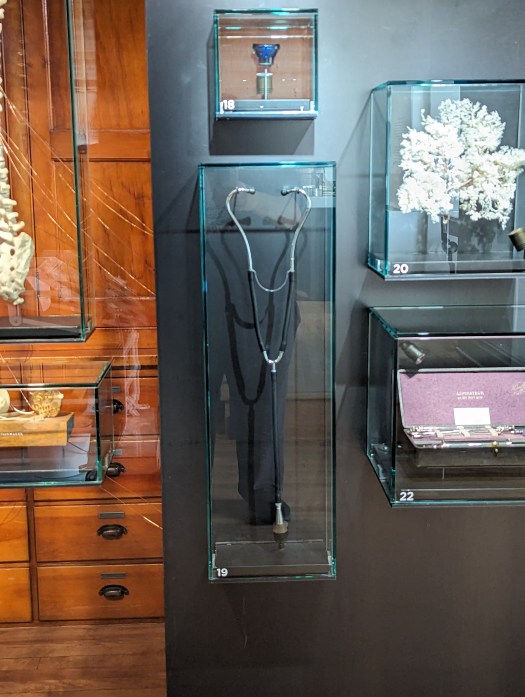

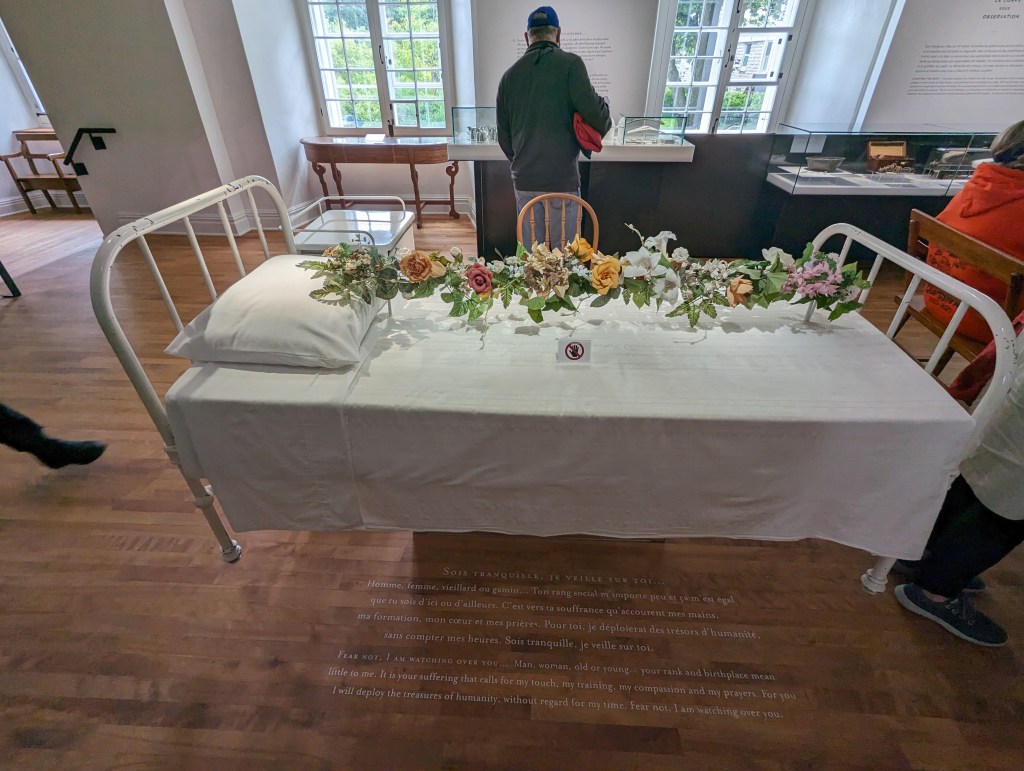
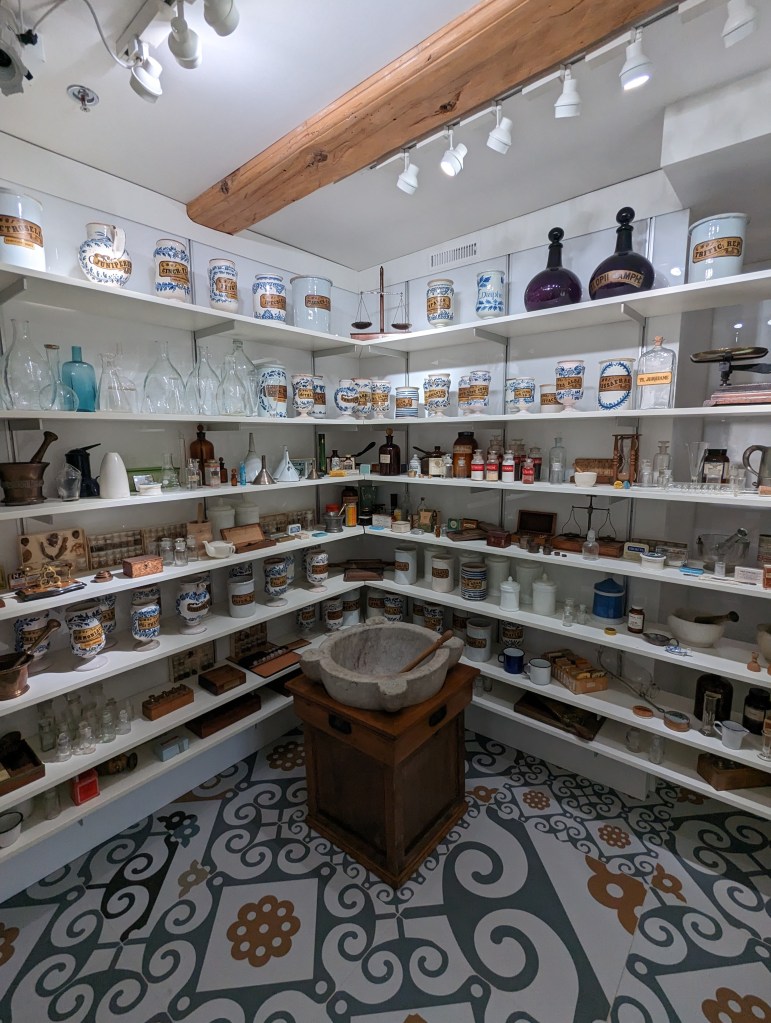
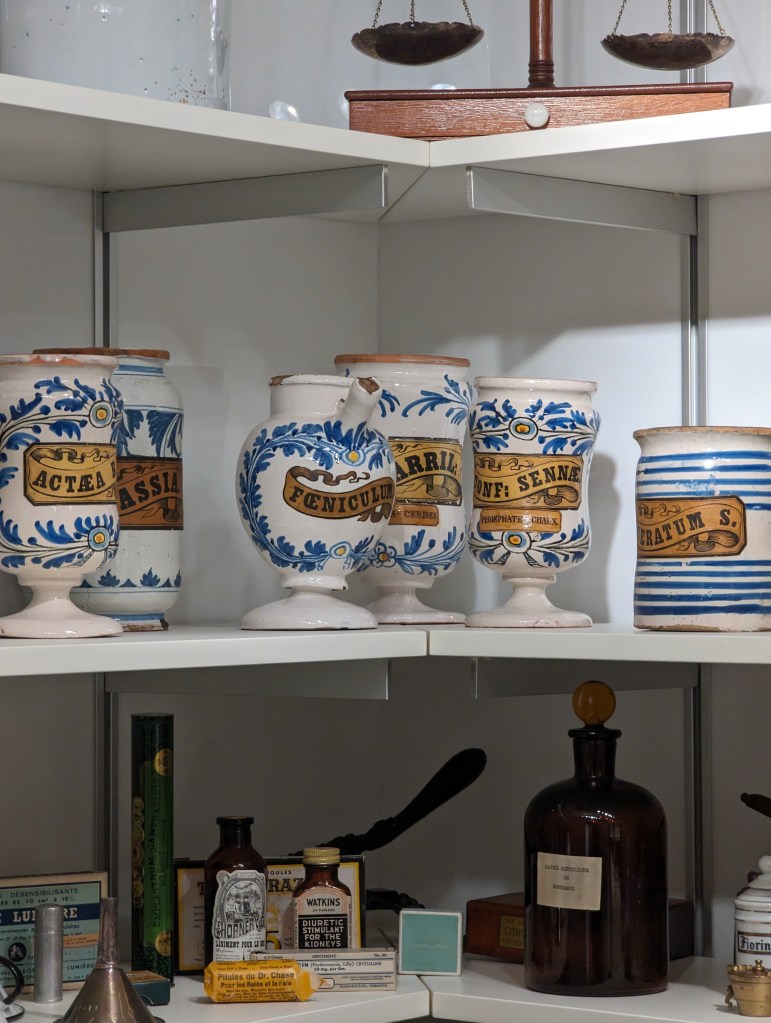
It was a long day, but we learned a lot about Quebec City. It’s a very beautiful place and well worth a visit if you are thinking about unique places to go see.
 Travel with Me!